

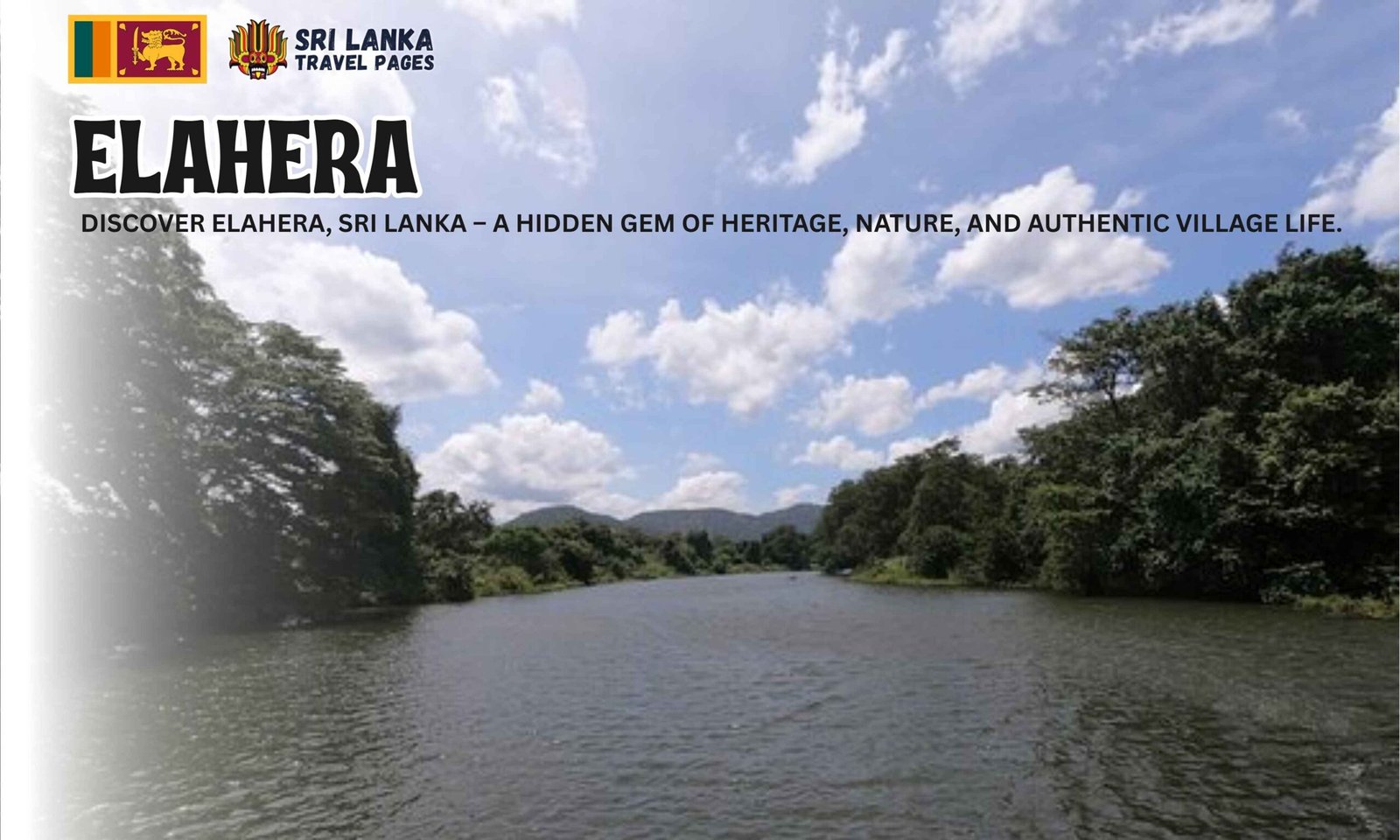
Nestled in the heart of Sri Lanka’s North Central Province, Элахера is a serene town that offers a perfect blend of cultural heritage, agricultural richness, and natural beauty. Often overshadowed by its famous neighbors like Polonnaruwa and Dambulla, Elahera remains one of the island’s most underrated travel destinations. The town is well-known for the Elahera Anicut, a historical irrigation marvel that has sustained generations of farmers and continues to support the region’s thriving paddy and vegetable cultivation. Surrounded by lush greenery, forest reserves, and ancient canal systems, Elahera provides a tranquil setting for eco-tourists and history enthusiasts alike.
Strategically located between Dambulla, Bakamuna, and Wasgamuwa, Elahera is a gateway to wildlife experiences and archaeological wonders. Visitors can explore nearby attractions such as the Национальный парк Васгамува, Dimbulagala Monastery, and hidden Buddhist ruins scattered across the countryside. The local community is known for its warm hospitality and strong agricultural traditions, making it ideal for those seeking authentic village experiences.
Whether you’re an explorer, photographer, or cultural traveler, Elahera promises a refreshing escape from urban chaos. With its scenic landscapes, ancient engineering marvels, and proximity to sacred cities, Elahera is emerging as a must-visit destination in Sri Lanka. If you’re planning your next trip to the island, don’t miss the opportunity to explore Elahera’s hidden charms—a perfect stopover for discovering Sri Lanka’s rural soul and ancient legacy.
Общая численность населения
46,600
Подразделения GN
28
🌿 Why is Elahera – Sri Lanka Special?
A Crossroads of Ancient Irrigation, Culture, and Wilderness
Elahera, nestled in the scenic Polonnaruwa District of Sri Lanka’s North Central Province, is a hidden treasure steeped in hydraulic ingenuity, agricultural life, and timeless traditions. As a gateway between the Cultural Triangle and the Wild East, Elahera invites travellers to pause, reflect, and rediscover Sri Lanka’s rural soul.
💧 Elahera Anicut – Ancient Engineering in Motion
At the core of Elahera’s identity is the Elahera Anicut, an engineering marvel dating back to the reign of King Vasabha (2nd century AD). This ancient diversion canal is part of the famed Rajarata irrigation system, linking Amban Ganga to Minneriya and Kaudulla tanks. Even today, it irrigates vast fields, nurturing the lives of thousands of farmers—a living tribute to Sri Lanka’s mastery of water management.
🌾 Life Rooted in Farming
Elahera thrives on its deep agricultural heritage. The planting and harvesting of paddy, vegetables, and fruits dictates the rhythm of village life. Farmers still rely on seasonal rains and tank-fed canals, embodying resilience and connection to the land. Traditional farming festivals, such as Aluth Sahal Mangalya, are celebrated with reverence and joy.
🕍 Hidden Spiritual & Historical Sites
Beyond its engineering fame, Elahera is dotted with lesser-known Buddhist temples, ancient stone inscriptions, and forest shrines that echo with the wisdom of centuries. The Национальный парк Васгамува is just a short journey away—offering sightings of wild elephants, sloth bears, and birds in their natural habitat.
🍛 The Taste of Elahera
Elahera’s cuisine is as earthy as its soil. Enjoy piping hot roti, spicy пол самбол, and wood-fired curries prepared by village hands. Visitors are often treated to fresh curd with kitul treacle, or a warm cup of kola kenda after a morning walk along the canal bunds.
🤝 A Village of Growth and Green Vision
Modern Elahera balances heritage with progress. Youth-led community gardens, IT education centres, и eco-farming cooperatives are steadily reshaping the local landscape. Visitors can participate in reforestation efforts or experience home-stays that share stories of rural resilience and innovation.
🧭 Why Visit Elahera?
For travellers seeking authenticity over luxury, Elahera offers a genuine rural experience. Whether you’re tracing ancient irrigation routes, photographing temple ruins, or simply enjoying a sunset by the canal, Elahera connects you to Sri Lanka’s past—and its peaceful, purpose-driven future.
| Код GN | Имя |
|---|---|
| 005 | Ihakuluwewa |
| 010 | Katukeliyawa |
| 015 | Diyabeduma |
| 020 | Konduruwawa |
| 025 | Attanakadawala West |
| 030 | Radavigeoya |
| 035 | Madudamana |
| 040 | Attanakadawala North |
| 045 | Attanakadawala South |
| 050 | Ikiriwewa |
| 055 | Kahatagahapitiya |
| 060 | Nikapitiya |
| 065 | Sarubima |
| 070 | Segala |
| 075 | Kottapitiya South |
| 080 | Somiyals |
| 085 | Gageyaya |
| 090 | Kottapitiya North |
| 095 | Damanayaya |
| 100 | Elahara |
| 105 | Heeratiya |
| 110 | Bakamoona |
| 115 | Sirikanduyaya |
| 120 | Atharagallewa |
| 125 | Maluweyaya |
| 130 | Orubendi Siyambalawa |
| 135 | Kumara Ella |
| 140 | Kirioya |
- Hospital: 066 2256661
Best Time to Visit Elahera, Sri Lanka
Experience History, Nature & Tranquillity in Ideal Weather
Elahera, located in Sri Lanka’s North Central Province, is a rural treasure that blends ancient irrigation wonders, lush agriculture, and wildlife access. Choosing the right time to visit ensures you can fully enjoy its natural beauty, historical attractions, and serene village life.
☀️ December to March – The Best Season (Dry and Pleasant)
This is the ideal time to visit Elahera, as the weather is dry, sunny, and comfortable, with daytime temperatures ranging from 25°C to 32°C.
The skies are mostly clear, making it perfect for visiting the Elahera Anicut, exploring Национальный парк Васгамува, and enjoying village walks.
Farming communities are active, and the landscape is lush from previous rains—great for photography and cultural exploration.
✅ Recommended for: sightseeing, outdoor activities, festivals, wildlife watching
🌧️ April to October – Rainy and Humid (Less Ideal)
This period sees the inter-monsoon and Maha monsoon rains, с heavy showers from October to January.
Roads may become muddy, and outdoor activities can be limited.
However, the area becomes vibrantly green, and those seeking solitude can enjoy quiet temples and uncrowded nature spots.
✅ Recommended for: off-season travel, nature lovers, budget-friendly stays
🎋 Local Festivals & Seasonal Highlights
Aluth Sahal Mangalya (New Rice Festival) – Celebrated in early January
Sinhala and Tamil New Year (April) – Cultural village celebrations with traditional games and food
Harvest Season (Dec–Feb) – Best time to observe rural life at its peak
📌 Travel Tips
Wear light, breathable clothing
Bring sun protection and insect repellent
If visiting during rainy months, carry waterproof gear
📷 Why Timing Matters
Elahera’s charm is tied to nature and farming rhythms. Visiting during the dry season offers the best experience for scenic beauty, cultural interaction, and historical exploration.
How to Reach Elahera
Elahera, located in Sri Lanka’s historic Polonnaruwa District, can be accessed easily from major cities like Colombo, Kandy, Dambulla, and Hingurakgoda. Known for its ancient irrigation canals and proximity to Wasgamuwa National Park, Elahera is a rural escape with deep historical and ecological value. Use the table below to explore travel routes, distances, and interactive maps.
| Город | Расстояние | Расчетное время | Информация о маршруте |
|---|---|---|---|
| Коломбо | 190 км | 4,5–5 часов | |
| Кэнди | 90 км | 2,5 часа | |
| Дамбулла | 45 км | 1 час | |
| Хингуракгода | 30 км | 45 мин. |
📍 Интерактивная карта маршрута
Geographical Overview – Elahera
Провинция: North Central Province
Округ: Polonnaruwa District
Отделский секретариат: Elahera Divisional Secretariat
Соседние районы: Dambulla, Hingurakgoda, Bakamuna, Naula, Laggala-Pallegama
Local Economy and Agriculture – Elahera
Elahera’s economy is deeply rooted in сельское хозяйство, making it one of the most agriculturally active zones in the Район Полоннарува. Blessed with fertile soil and supported by ancient irrigation networks such as the Elahera Anicut, the region sustains a thriving farming community that relies heavily on traditional and semi-modern cultivation techniques.
🧺 Key Crops and Produce:
Рис (падди) is the dominant crop, cultivated during both Maha и Яла seasons.
Vegetables such as brinjal, okra, chili, and long beans are grown in rotation with grains.
Fruits like bananas, papayas, and guavas contribute to both local consumption and small-scale trade.
Cash crops including sugarcane and maize are grown in select pockets, adding value to seasonal farming.
Thanks to reliable water from the ancient irrigation canals, most farming in Elahera is tank-fed, reducing dependency on unpredictable monsoons. The Elahera Anicut system, originally built by King Vasabha, continues to support thousands of acres of farmland.
💼 Other Livelihoods:
Apart from agriculture, some residents engage in:
Brickmaking и керамика, using local clay.
Livestock rearing, especially dairy farming and poultry.
Micro enterprises such as food processing and rural crafts, often supported by community cooperatives and development programs.
🌿 Sustainable Outlook:
In recent years, youth-led initiatives and NGOs have introduced органическое земледелие, composting, и eco-friendly pesticide alternatives, slowly modernizing Elahera’s traditional economy while preserving its environmental balance.
Community and Culture – Elahera
Elahera is not just a scenic village—it is a living embodiment of Sri Lankan rural life, where traditions, community spirit, and simplicity coexist harmoniously. The people of Elahera are known for their warmth, hospitality, and strong sense of identity rooted in agriculture, religion, and family values.
🙏 Buddhist Influence and Spiritual Life
Buddhism plays a central role in daily life. Most residents begin their day with rituals at local temples, and full moon Дни Пойи are observed with devotion. Modest but spiritually significant temples like Elahera Raja Maha Viharaya and smaller village shrines are focal points for community gatherings, meditation sessions, and annual peraheras (processions).
🎎 Festivals and Traditions
Cultural celebrations such as the Сингальский и тамильский Новый год (Авуруду) in April are marked with traditional games, music, and food-sharing. The harvest season is another important period, where gratitude rituals and “Dane” ceremonies are organized to bless the land and people.
👫 Community Life
The village lifestyle encourages strong community bonds. Families often share land, tools, and even harvests. Village elders are respected as cultural custodians, and youth groups and women’s societies play active roles in organizing events, charity work, and educational workshops.
🎨 Arts and Crafts
Folk songs, drumming, and traditional dance forms still echo during festivals. Handicrafts such as woven mats, pottery, и cane baskets are preserved as both cultural expressions and sources of income.
Education and Public Facilities – Elahera
Elahera, though rural in setting, is equipped with a network of educational and public facilities that support the community’s growth and wellbeing. The government, along with local initiatives, continues to enhance access to education, healthcare, and essential services for the area’s residents.
🏫 Education in Elahera
Elahera hosts a mix of primary, secondary, and national schools, serving students from surrounding villages. Institutions such as:
Elahera Central College (National School)
Bakamuna Maha Vidyalaya
Madaya Vidyalaya
…provide a standard curriculum under Sri Lanka’s national education system. Many schools also emphasize agriculture and environmental awareness, integrating the local lifestyle into the learning process. Students regularly participate in cultural events, sports meets, and island-wide examinations.
Despite challenges like teacher shortages and limited resources, community-led tuition classes и youth education projects—including IT and English language training—are on the rise, empowering the next generation.
🏥 Health and Public Services
Healthcare is supported by:
Bakamuna Hospital – the main government hospital serving Elahera DS area
Elahera Ayurvedic Rural Hospital – offering traditional herbal treatments
In addition, mobile medical camps, maternal clinics, and public health education programs play a vital role in rural health support.
🏢 Other Facilities
Elahera Divisional Secretariat – administrative hub for public services like birth certificates, land documentation, and welfare programs
Agricultural Extension Offices – support farmers with guidance and subsidies
Post Offices and Banks – enable basic financial and communication services
Transportation and Accessibility – Elahera
Elahera offers a blend of rural charm and practical connectivity, making it accessible via several transport options.
🚌 Bus Services
Автобусы SLTB и частные автобусы connect Elahera with key hubs like Полоннарува, Хингуракгода, и Коломбо.
Route 581/3 runs from Polonnaruwa to Elahera (~57 km)
Buses from Colombo to Dambulla, then onward via local services, provide a convenient route
Public transport access is limited—only 9 of Elahera’s GN divisions have direct bus terminals; others require travel up to 5 km
🚆 Train Connections
No train station in Elahera itself; the nearest is Железнодорожная станция Полоннарува, ~57 km away
Travellers can take trains via Полоннарува или Хингуракгода, though bus or taxi transfers are needed.
🚗 Road & Car Travel
Elahera is directly connected by B-Grade B112 and B312 roads, linking it to Giritale, Наула, and regional highways.
Travel times by car:
Colombo → Elahera: ~169 km, ~3 hrs
Polonnaruwa → Elahera: ~57 km via Hingurakgoda, ~1–1.5 hrs by road.
🚕 Taxi & Private Vehicles
Taxis from Polonnaruwa to Kandy via Elahera follow the scenic B112 route; fares range between LKR 5,000–8,000 (~4 hours).
For tourists, combining taxis with buses/trains ensures flexible and comfortable travel.
📌 At a Glance
| Mode | Connectivity | Примечания |
|---|---|---|
| Автобус | Polonnaruwa (bus 581/3), Colombo → Dambulla | Limited local stops |
| Тренироваться | Polonnaruwa station (~57 km away) | Requires onward transfers |
| Car/Taxi | B112/B312 roads link to regional highways | Scenic and flexible |
| Private taxi | Door-to-door via Kandy or Polonnaruwa | ₨5,000–8,000 fares |
💡 Советы путешественникам
Plan: Bus stops can be 2–5 km away; check schedules before travelling.
Rent a tuk‑tuk: Ideal for short trips around Elahera and to nearby villages.
Combine transport: Use the Polonnaruwa train, then take a taxi or bus to reach Elahera comfortably.
📸 Why Visit or Invest in Elahera
Элахера is a vibrant rural heartland where ancient irrigation meets modern potential — ideal for eco-tourism, sustainable agriculture, and community-driven growth in Sri Lanka’s North Central Province.
- 💧 Historic irrigation network: Home to the Elahera Anicut, part of the ancient canal system built by King Vasabha.
- 🌾 Agricultural productivity: Thriving paddy, vegetable, and fruit cultivation supported by tank-fed irrigation.
- 🐘 Eco-tourism gateway: Close to Wasgamuwa National Park — a wildlife haven for elephants and birdwatchers.
- 💼 Rural innovation: Youth-led development in education, organic farming, and IT training is shaping Elahera’s future.
Discover Elahera — where history flows with opportunity, and community leads the way.