
阿拉瓦拉阿穆纳岩石铭文|库鲁内格勒
-
历史与文化
-
自然
-
宗教场所
描述
Historical Inscription
Archaeological Site
Overview: Alawala Rock Inscription
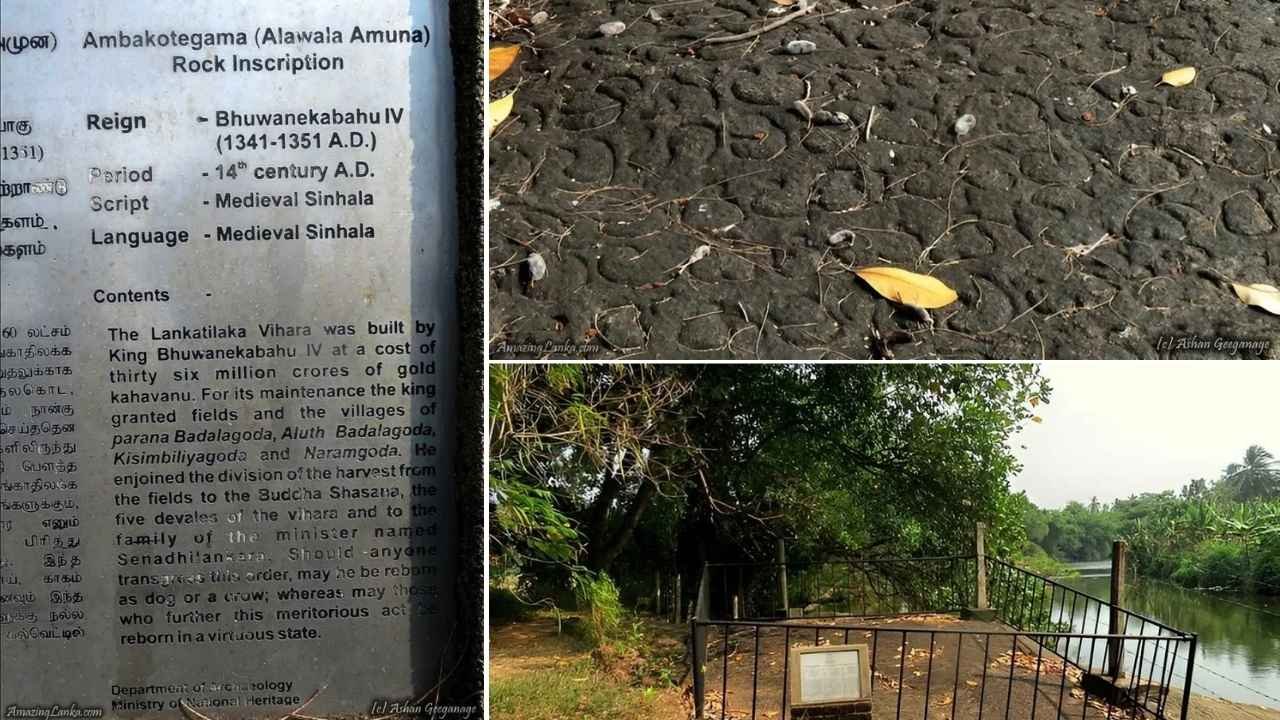
About 15 km from Kurunegala, near the Kospothu Oya and Alawala Amuna (anicut), lies the Alawala Rock Inscription—an archaeological treasure protected by an iron fence. This partly damaged rock record, once misattributed to Parakramabahu of Dambadeniya, was later correctly identified as a 14th-century grant associated with the building of the Lankatilaka Viharaya.
The inscription is carved into a large natural rock surface close to the riverbank, blending history with the surrounding landscape. Its script, with bold and deeply cut letters, reflects the craftsmanship of medieval Sri Lanka and the importance placed on documenting royal acts of religious patronage. Though time and treasure hunters damaged its upper portion, the surviving lines still preserve valuable details of the Gampola period.
More than just a stone record, the Alawala inscription is a historical testimony that connects Kurunegala’s heritage to the wider Buddhist monastic culture of the 14th century. For visitors, it offers a quiet but powerful glimpse into how kings legitimized their authority through temple grants, and how inscriptions served as public reminders of faith and governance.
历史背景
First mentioned in 1883 by Edward Müller, the inscription was incorrectly described as a grant to the Maedagama temple. In 1931, Senarath Paranavitana inspected the site and later published the content, proving that it referred instead to the newly founded Lankatilaka Viharaya. The original royal donor’s name has been lost due to damage, but scholars suggest either King Buwanekabahu IV (1341–1351 CE) or Parakramabahu V (1344–1359 CE) of Gampola.
Physical Features of the Inscription
- Size: 12 feet by 11 feet 8 inches
- Lines: 33 lines of deeply carved text
- Letter size: Between 2¾ and 5¼ inches
- Script style: Similar to 14th-century inscriptions such as Gadaldeniya
- Damage: First ten lines destroyed by treasure hunters, erasing the king’s name
历史意义
The Alawala Rock Inscription corrected a historical misconception and confirmed royal patronage of Lankatilaka Viharaya. Today, it remains an important cultural heritage site, protected and studied for its contribution to understanding Sri Lanka’s medieval kingdoms.
交通及周边环境
- Location: Alawala village, about 15 km from Kurunegala town
- Transport: Accessible via Kurunegala–Alawwa road; tuk-tuks and private vehicles are best
- Access: A short walk required from the roadside near Kospothu Oya
最佳旅游时间
The site can be visited throughout the year, but the dry months from January to March and June to September are most comfortable. Monsoon seasons may make access paths slippery, so good footwear is advised.
附近景点
- Ridi Viharaya – Ancient cave temple linked to King Dutugemunu
- Yapahuwa Fortress – A 13th-century rock fortress and former capital
- Dambadeniya Ruins – Remnants of the medieval kingdom of Dambadeniya
- Kurunegala Rock (Athugala) – Giant rock with panoramic city views
常问问题
Who first recorded the inscription?
Which king built it?
为什么这很重要?
Is it open to the public?
最佳旅游时间
-
全年
精彩片段
-
免费入场
-
游览所需时间:4 小时