

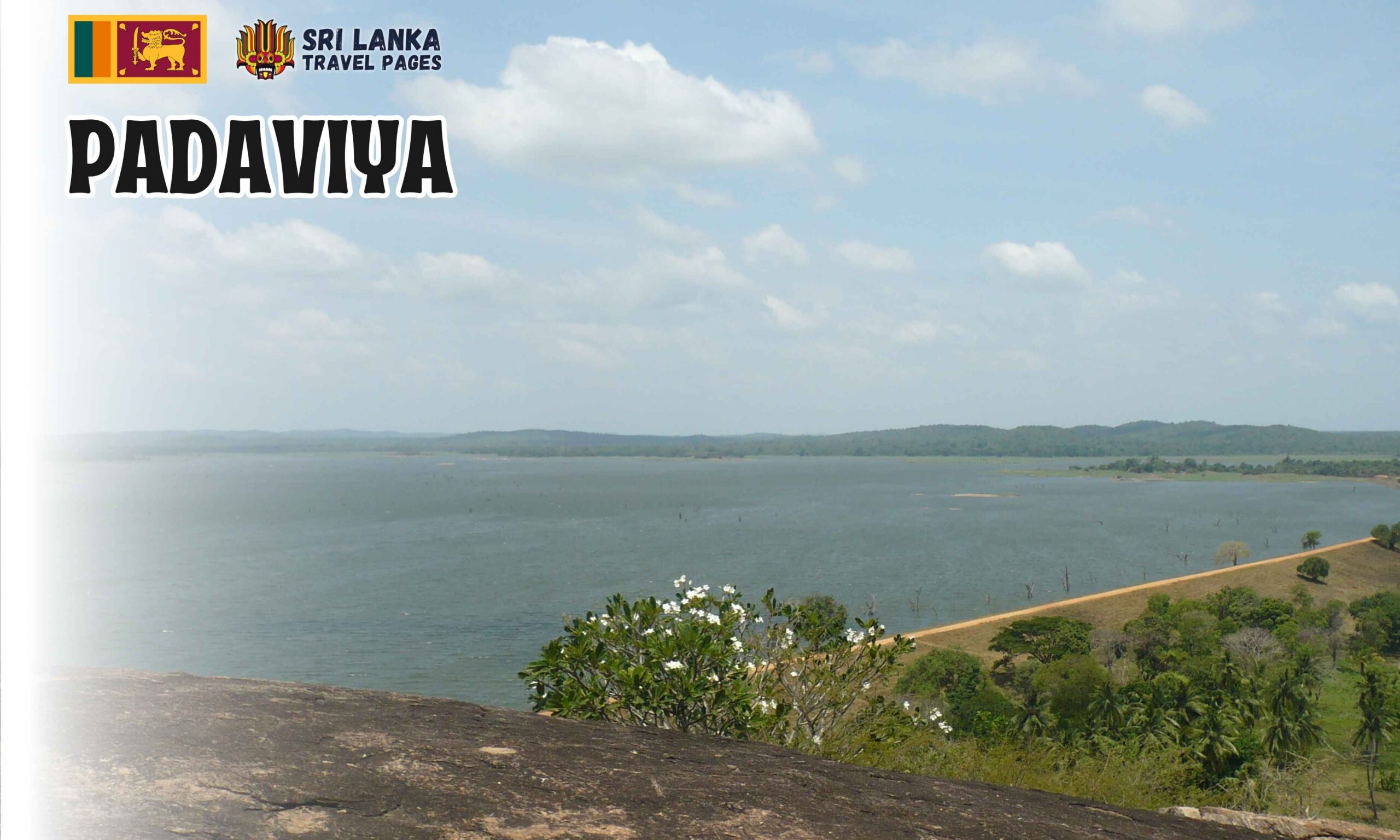
Padaviya is a tranquil and historically significant town nestled in the Anuradhapura District of Sri Lanka’s North Central Province. Known for its expansive reservoirs, ancient irrigation systems, and rural charm, Padaviya is a destination that offers an authentic glimpse into Sri Lanka’s cultural and agricultural heritage. The town is best known for the Padaviya Wewa—one of the oldest and largest reservoirs in the country—believed to date back to the era of ancient kings. This reservoir not only supports local farming but also symbolizes the advanced water management practices of ancient Sri Lanka.
Surrounded by paddy fields, forest reserves, and small villages, Padaviya is ideal for eco-tourists, history enthusiasts, and those seeking off-the-beaten-path travel experiences. Visitors can explore serene Buddhist temples, meet friendly locals, and enjoy the untouched natural environment that makes this area unique. Its proximity to the Maduru Oya National Park also makes Padaviya a strategic base for wildlife safaris and birdwatching adventures.
Despite its rural setting, Padaviya plays a vital role in regional development and agriculture. The local community is deeply connected to the land, and seasonal festivals often highlight this bond with nature. Whether you’re traveling for spiritual reflection, eco-tourism, or cultural exploration, Padaviya offers a peaceful escape from the bustling city life.
For those planning to visit Sri Lanka, don’t miss the opportunity to discover Padaviya—a true hidden gem with timeless beauty and historical depth.
Population totale
25,275
Divisions GN
15
🌿 Why is Padaviya – Sri Lanka Special?
A Northern Frontier of Heritage, Water, and Life
Padaviya, resting in the ancient and fertile plains of Sri Lanka’s North Central Province, is a timeless village where history and harmony blend seamlessly. Located in the Anuradhapura District, this peaceful region is shaped by centuries of traditional agriculture, Buddhist spirituality, and the legacy of ancient kings. Unlike urban centres, Padaviya remains untouched by modern chaos — and that’s exactly what makes it special.
💧 Legacy of Water: Padaviya Wewa
At the heart of Padaviya lies the majestic Padaviya Wewa, one of the oldest and largest man-made reservoirs in Sri Lanka. Believed to date back to King Mahasen’s reign, this ancient tank not only supports thousands of farming families but stands as a monument to Sri Lanka’s hydraulic civilization. Early mornings by the reservoir are serene, with mist dancing on water and birds greeting the day.
🌾 Culture Rooted in the Soil
Padaviya is more than scenic beauty—it’s a living museum of agrarian traditions. Villagers rise with the sun to cultivate paddy, vegetables, and pulses, using methods passed down for generations. Festivals are tied to the harvest calendar, and age-old rituals reflect deep respect for nature.
🕍 Spiritual and Historical Threads
Padaviya is home to modest yet spiritually significant Buddhist temples, meditation centres, and ruins that hint at ancient settlements. Sites like Buduruwagala Viharaya and lesser-known rock inscriptions add mystery to this quiet land.
🍛 Flavours of the Village
A visit to Padaviya is incomplete without tasting its food. From fresh kiri bath and lunumiris to earthy dishes cooked over firewood—every bite carries the taste of tradition. Locals often welcome guests with curd, treacle, and stories passed down through generations.
🤝 A Village with a Vision
Padaviya may be rural, but it’s not behind. Youth-led education projects, rural ICT training, and sustainable farming initiatives are quietly transforming the region. Here, travellers find not just peace, but purpose—a chance to engage with the land and people in meaningful ways.
🛶 Why Visit Padaviya?
Whether you’re a history buff, eco-traveller, documentary creator, or a mindful tourist, Padaviya invites you. Come to disconnect from noise and reconnect with nature, heritage, and humble humanity.
| Code GN | Nom |
|---|---|
| 005 | Buddhangala |
| 010 | Elikibulagala |
| 015 | Abayapura |
| 020 | Maithreepura |
| 025 | Parakramapura |
| 030 | B yaya |
| 035 | Bisokotuwa |
| 040 | Sudharshanagama |
| 045 | Balayawewa |
| 050 | Mahasenpura |
| 055 | Urewa |
| 060 | Kubukwewa |
| 065 | Ruwanpura |
| 070 | Bogahawewa |
| 075 | Padaviya |
- Police Station: 025-2253222 /071-8591217
- Hôpital: 0252 253 261
Best Time to Visit Padaviya, Sri Lanka
December to April – The Ideal Season
Le best time to visit Padaviya est pendant le saison sèche de décembre à avril. During these months, the region enjoys sunny weather, clear skies, and lower humidity—making it perfect for sightseeing, photography, and cultural exploration. Fields are green, tanks are full, and rural festivals bring colour and joy to village life.
This season is ideal for:
Exploring Padaviya Wewa and other historic tanks
Visiting local temples and ruins
Enjoying scenic nature trails and birdwatching
Engaging in agricultural field visits and eco-tourism
🌦️ May to September – Agricultural & Cultural Insights
Cette période marque le inter-monsoon and early Yala season, when rains return gently and farmers begin preparing their lands. While occasional showers occur, mornings are often clear. Visitors interested in traditional paddy farming, irrigation practices, and community life will find this a rewarding time.
Great for:
Experiencing cultivation cycles and rural farming
Participating in local village events
Cooler evenings with beautiful countryside mists
🌧️ October to November – Monsoon Season
These months bring the Maha monsoon, with heavier rainfall, especially in the evenings. Travel is still possible, but road conditions may vary. While tourism is limited, this is a good time for researchers, documentary makers, and those seeking solitude.
🌾 Final Tip:
If you’re planning a trip that involves photography, temple visits, eco-tourism, or farming partnerships, aim for De décembre à avril for the best overall experience in Padaviya.
How to Reach Padaviya
Padaviya, located in the tranquil North Central Province of Sri Lanka, is accessible through scenic routes from major cities like Colombo, Anuradhapura, Trincomalee, and Medawachchiya. The village is known for its ancient reservoir, rural landscapes, and cultural significance. Use the table below to explore routes, distances, and live map directions to Padaviya.
| Ville | Distance | Durée estimée | Informations sur l'itinéraire |
|---|---|---|---|
| Colombo | 250 km | 6 à 7 heures | |
| Anuradhapura | 85 km | 2 heures | |
| Trincomalee | 130 km | 3 heures | |
| Medawachchiya | 55 km | 1,5 heure |
📍 Carte interactive du parcours
Geographical Overview – Padaviya
Province: North Central Province
District: Anuradhapura
Secrétariat divisionnaire: Padaviya Divisional Secretariat
Neighbouring Areas: Kebithigollewa, Medawachchiya, Welioya, Morawewa
Local Economy and Agriculture – Padaviya
Padaviya’s local economy is deeply rooted in agriculture, reflecting the region’s identity as a rural heartland of Sri Lanka’s North Central Province. The ancient Padaviya Wewa (reservoir) remains the lifeline of the community, providing irrigation to vast stretches of paddy lands and chena cultivation. Agriculture is not only a livelihood but a way of life, with generations of families engaging in farming from season to season.
🚜 Major Crops and Livelihoods
The region is best known for:
culture du riz during the Yala and Maha seasons
Chena (slash-and-burn) farming of vegetables, grains, and pulses
Home gardening for jackfruit, bananas, mangoes, and leafy greens
Coconut, maize, and manioc as seasonal cash crops
Many farmers still follow the traditional ‘wap puraya’ (ploughing season) and use organic methods, including cow dung fertilizers and natural pest control, especially in chena fields.
🐄 Livestock & Rural Enterprises
Livestock plays a supporting role in the economy, with families raising buffaloes for milk, cows for ploughing, and poultry for eggs and meat. Local dairy products like curd and treacle are well-known in the surrounding areas.
À petite échelle rice mills, beedi production, carpentry, and weaving provide supplementary income, particularly during off-harvest months.
🌱 Moving Towards Sustainable Growth
Padaviya is also seeing the rise of youth-led agro-cooperatives, organic farming collectives, and community-driven development projects. These efforts are helping reduce rural poverty, improve food security, and encourage eco-friendly practices in agriculture.
Community and Culture – Padaviya
Padaviya is not just a place — it’s a living, breathing community where tradition, kindness, and resilience define daily life. Deeply rooted in Sri Lankan village values, the people of Padaviya are known for their hospitality, strong family bonds, and respect for elders and nature. The sense of togetherness is visible in every household, temple, and pola (local market).
🕯️ Cultural Traditions and Spiritual Life
Buddhism is the spiritual foundation of the community, with small village temples and ancient shrines serving as cultural hubs. Morning almsgiving, full moon Poya celebrations, and temple processions are key parts of village life. Seasonal festivals such as Nouvel An cinghalais et tamoul are celebrated with traditional games, music, and home-cooked feasts.
Many stories passed down through generations speak of tank builders, paddy kings, and ancient wisdom, preserving a rich oral history.
🎭 Arts, Crafts & Celebrations
While Padaviya is not urbanized, it holds its own when it comes to local creativity. You’ll find:
Traditional drummers (beraya) and dancers during temple festivals
Women engaging in tissage à la main and coconut-leaf crafts
Village fairs showcasing local produce, herbs, and food
🧒 Education, Unity & Modern Values
Despite its rural setting, Padaviya’s community emphasizes education, social development, and youth empowerment. Schools, ICT training centres, and sports grounds are active spaces where the younger generation blends modern thinking with traditional pride.
In Padaviya, culture is not preserved in museums — it’s lived every day.
Education and Public Facilities – Padaviya
Padaviya, though rural in nature, offers a well-rounded selection of educational and public facilities that serve the local population and surrounding communities. The region continues to evolve with a focus on education, health, transport, and digital access, supporting the long-term development of its people.
🏫 Education
Education is a top priority in Padaviya, with a strong network of government schools, Maha Vidyalayas (Central Colleges), and primary institutions. Key schools include:
Padaviya Central College (National School) – the main secondary institution offering O/L and A/L streams
Plusieurs village-level primary schools such as Buddhangala Vidyalaya and Abayapura Kanishta Vidyalaya
Computer training centres and vocational programs supported by NGOs and rural youth networks
Literacy rates are above average for a rural area, with a rising number of students entering national universities each year.
🏥 Public Health and Hospitals
Healthcare is accessible through:
Padaviya Base Hospital – a well-equipped district-level government hospital offering OPD, inpatient, maternal, and emergency services
Ayurvedic Hospital – for traditional wellness and herbal treatment
Rural clinics and midwife centres – spread across GN divisions for maternal and child care
🚌 Other Public Services
Padaviya is supported by:
Poste de police – for safety and law enforcement
Secrétariat divisionnaire – for administrative services and citizen welfare
Local transport – buses and three-wheelers connecting to Medawachchiya, Kebithigollewa, and Anuradhapura
Libraries, public wells, sports grounds, and a weekly pola (market)
Transportation and Accessibility – Padaviya
Padaviya is well-connected via road and public transport, making it accessible for travellers, commuters, and visitors to the area.
🚌 Bus Networks
Direct buses link Padaviya with Anuradhapura, departing from the central station. The ride covers about 86 km and takes 1 hr 45 min by car or around 7 hrs by local bus, costing approximately ₹3,300–4,300 LKR
There are inter-provincial bus services in the region (e.g., route 964 via Padaviya) operated by SLTB and private contractors.
Long-distance travel from Colombo costs roughly LKR 3,500–4,900 by public bus (~8 hours) or an additional amount for a train.
🚆 Train & Railway
Padaviya does not have its operational railway station yet; any future station is still in the planning stage.
The nearest active railway access points are located in Anuradhapura ou Medawachchiya, from where visitors can continue by road.
🚗 Transport privé
Driving from Colombo covers approximately 283 km and takes about 5 heures, on a relatively smooth highway route.
From Anuradhapura, a private vehicle can reach Padaviya in around 1 hr 50 min for the 86 km stretch
✔️ Summary Table
| Mode de transport | Depuis | Distance | Time Estimate | Approx. Fare (LKR) |
|---|---|---|---|---|
| Bus (local) | Anuradhapura | ~86 km | ~7 hrs by bus / ~1h45 by car | 3,300–4,300 |
| Bus (inter-prov.) | Colombo | ~283 km | ~8 hrs by bus + transfers | 3,500–4,900 |
| Train + Road Combo | Colombo | ~283 km | ~5–6 hrs total | 4,100–12,000 (train) |
| Private Car/Taxi | Colombo | ~283 km | ~5 hrs | 11,000–17,000 |
| Private Car | Anuradhapura | ~86 km | ~1 hr 50 min | Varies |
🧭 Tips for Travellers
Bus travel offers authenticity but may be slow due to frequent stops, making it perfect for those seeking an immersive travel experience.
Private travel delivers speed and flexibility—ideal for eco-tourists, researchers, or those en route to remote projects.
Train + road is a balanced choice that combines scenic and efficient travel, though it requires transfers at Anuradhapura.
Check SLTB routes & timetables ahead using regional numbers, such as 964, via Padaviya to avoid surprises.
📸 Why Visit or Invest in Padaviya
Padaviya is a unique blend of historical heritage, abundant natural resources, and untapped development potential — making it an ideal destination for sustainable tourism and rural investment.
- 💧 Ancient irrigation legacy: Home to the historic Padaviya Wewa — a symbol of advanced ancient engineering.
- 🌾 Agri-based lifestyle: Vibrant community built around rice farming, chena cultivation, and dairy production.
- 🌱 Eco and heritage tourism: Rich biodiversity, serene tank-side temples, and unspoiled forest reserves.
- 💡 Community development: Emerging projects in ICT, education, and sustainable agriculture led by local youth.
Explore Padaviya — where history, community, and opportunity meet in harmony.