
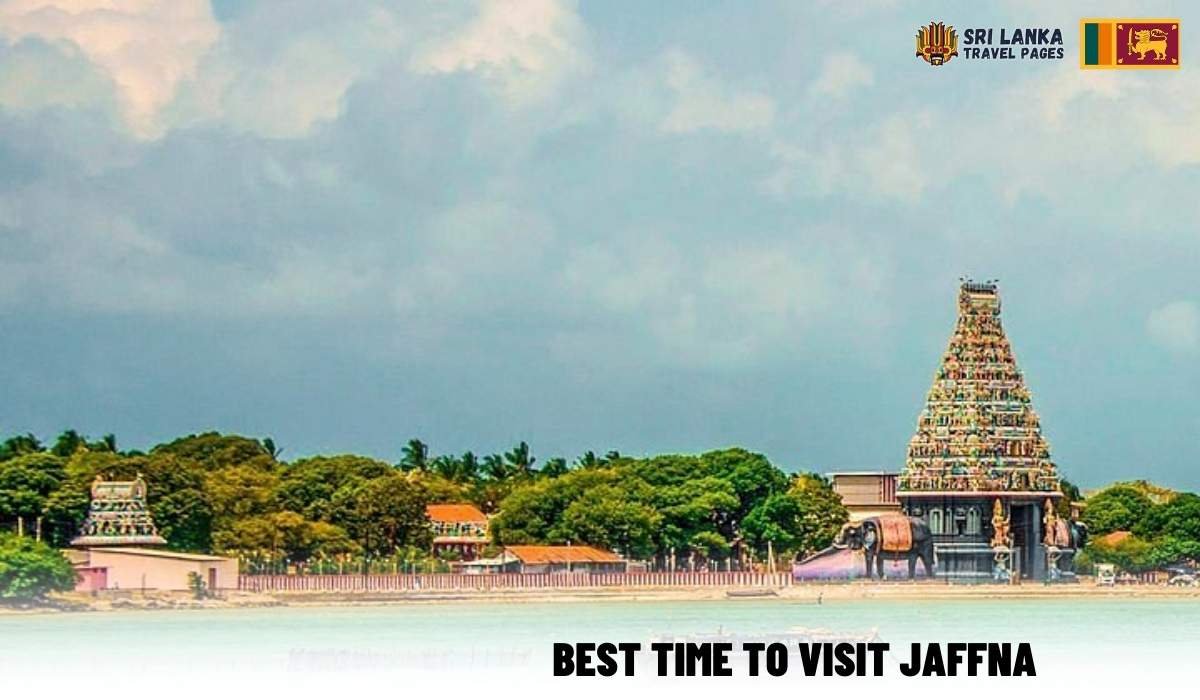
Meilleure période pour visiter Jaffna
La meilleure période pour visiter Jaffna, au Sri Lanka, dépend en grande partie du type d'expérience recherchée. Jaffna, réputée pour sa riche culture tamoule, ses temples historiques, ses marchés animés et la beauté sereine de son littoral, se visite toute l'année, mais la période la plus agréable est généralement la saison sèche, de janvier à septembre.
Saison sèche (janvier à septembre) : Ces mois offrent des journées chaudes et ensoleillées avec des précipitations minimales, idéales pour les visites touristiques, la découverte de sites emblématiques comme le temple Nallur Kandaswamy Kovil et la découverte des magnifiques îles de Jaffna, telles que Delft et Karainagar. Le temps clément facilite également l'exploration de la lagune de Jaffna, les balades à vélo dans les villages et la participation aux festivals locaux. Cette période correspond à la haute saison touristique : attendez-vous donc à une ambiance culturelle animée, des marchés vibrants et une multitude d'événements.
Saison de la mousson (octobre à décembre) : D'octobre à décembre, la mousson du nord-est apporte des pluies plus fréquentes et des orages occasionnels. Si les fortes averses peuvent perturber les activités de plein air, elles offrent également à la région un paysage verdoyant et rafraîchissant. Cette période creuse permet de profiter d'une expérience plus paisible, avec moins de touristes, des tarifs d'hébergement plus avantageux et l'occasion d'apprécier le rythme de vie plus tranquille de Jaffna.
En conclusion, Pour profiter d'une météo optimale et d'une vie culturelle riche, la période idéale pour visiter Jaffna s'étend de janvier à septembre. Pour les voyageurs en quête de tranquillité et de nature luxuriante, la saison de la mousson offre également une expérience enrichissante.
📅 Meilleure période pour visiter Jaffna – Guide mois par mois
📍 Aperçu
Jaffna, Située à l'extrémité nord du Sri Lanka, cette région est réputée pour son riche patrimoine tamoul, ses temples historiques, ses îles magnifiques et sa cuisine unique.
🌞 Meilleure période pour visiter
De janvier à septembre : Saison sèche avec un temps chaud et ensoleillé, idéale pour les visites touristiques, la découverte des îles et la participation aux festivals culturels.
🎉 Saison des festivals
Août: Le meilleur mois pour assister au grand festival Nallur Kandaswamy Kovil, une célébration culturelle vibrante.
🌿 Saison intermédiaire
Septembre: Il fait encore chaud, il y a moins de monde, ce qui offre une atmosphère détendue et des tarifs plus avantageux sur les hôtels et les excursions.
🌧️ Saison de la mousson
D'octobre à décembre : La mousson du nord-est apporte des pluies plus abondantes, mais la région devient luxuriante et verdoyante, idéale pour une exploration culturelle à un rythme tranquille.
📊 Légende du graphique
- 🌞 Vert (janv.-sept.) : Météo idéale pour les visites touristiques et les activités de plein air.
- 🌿 Jaune (sept.) : Chaleureux, moins fréquenté et abordable.
- 🌧️ Orange (oct.-déc.) : Pluies de mousson, période creuse avec des paysages luxuriants.
🌴 Aperçu du climat de Jaffna
Jaffna, située à l'extrémité nord du Sri Lanka, bénéficie d'un climat tropical chaud et tempéré tout au long de l'année, ce qui en fait une destination idéale pour les découvertes culturelles et les escapades côtières. Les températures oscillent généralement entre 26°C et 33°C, Offrant des conditions idéales pour les visites touristiques, les temples, les excursions d'île en île et la dégustation de l'authentique cuisine de Jaffna, la région connaît une saison sèche et une saison de mousson bien distinctes, chacune offrant des opportunités de voyage uniques.
☀️ Saison sèche (janvier – septembre)
Ceci est largement considéré comme le Meilleure période pour visiter Jaffna. Le temps est généralement ensoleillé avec des précipitations minimales, ce qui est idéal pour explorer des sites historiques comme le temple Nallur Kandaswamy Kovil, visiter le fort de Jaffna ou profiter d'îles préservées comme Delft et Karainagar. La mer est calme, parfaite pour les excursions en bateau et les journées à la plage. Cette période est également marquée par des événements culturels dynamiques, tels que le grand festival de Nallur en août.
🌧️ Saison de la mousson (octobre – décembre)
La mousson du nord-est apporte des pluies plus fréquentes et parfois intenses, surtout en novembre et début décembre. Si les activités de plein air peuvent être perturbées, la pluie sublime les paysages verdoyants de la région, offrant un cadre idyllique pour les circuits culturels et patrimoniaux. La moindre affluence touristique à cette période se traduit par des sites plus calmes et des prix d'hébergement plus abordables, idéaux pour les voyageurs en quête de détente.
🌡️ Température et humidité
Jaffna bénéficie de températures chaudes toute l'année, avec des soirées plus fraîches, idéales pour flâner le long du lagon ou au marché. L'humidité a tendance à augmenter avant la mousson, mais est contrebalancée par une douce brise côtière. La température de la mer se maintient entre 10 et 20 degrés Celsius. 27°C et 29°C, assurant des conditions confortables pour les activités nautiques pendant la majeure partie de l'année.
🌞 Haute saison touristique – de janvier à septembre
La période à partir de De janvier à septembre marque le haute saison touristique Jaffna offre les conditions les plus favorables pour les visites touristiques, les découvertes culturelles et l'exploration du littoral. C'est à cette période que le temps est chaud, ensoleillé et généralement sec, idéal pour explorer les temples, les îles et les sites historiques.
☀️ Météo idéale pour les visites touristiques
Durant cette saison, les températures oscillent généralement entre 27°C et 33°C, Avec des précipitations minimales, le temps agréable permet de visiter des sites emblématiques comme le temple Nallur Kandaswamy Kovil, le fort de Jaffna et les îles environnantes telles que Delft et Karainagar. Un ciel dégagé et une mer calme rendent également les traversées en ferry et les sorties à la plage plus agréables.
🏖️ Ambiance culturelle animée
Les mois de haute saison offrent une scène culturelle vibrante, avec des marchés locaux, des stands de cuisine de rue et des spectacles traditionnels qui attirent des visiteurs aussi bien locaux qu'étrangers. Le mois d'août, en particulier, est un moment fort grâce au célèbre festival de Nallur, où la ville s'anime au rythme de processions, de musique et de rituels religieux.
📅 Événements et festivités
De janvier à septembre, plusieurs événements importants ont lieu, des fêtes des récoltes comme Thai Pongal aux célébrations religieuses et aux rassemblements culturels. Le festival de Nallur, en août, est le plus important ; il attire des milliers de fidèles et de touristes pendant près d’un mois de festivités traditionnelles.
💡 Conseils de voyage
Comme il s'agit de la période la plus touristique, réservez votre hébergement et vos transports à l'avance pour bénéficier des meilleures options. Les prix peuvent être plus élevés, surtout aux alentours d'août pendant la saison des festivals. Pour profiter d'un temps agréable et éviter la foule, privilégiez un voyage début janvier ou fin septembre.
🌤️ Intersaison – Septembre
Le saison intermédiaire à Jaffna, les chutes sont généralement de Septembre, Ce mois marque la transition entre la longue période sèche et l'arrivée de la mousson du nord-est. Il offre un agréable climat chaud, une affluence touristique moindre et des tarifs plus abordables qu'en période de forte affluence touristique.
🌅 Météo équilibrée
En septembre à Jaffna, les températures sont chaudes, avec des moyennes comprises entre 27°C et 32°C, Avec des journées généralement ensoleillées et quelques averses légères occasionnelles, c'est le moment idéal pour découvrir les sites culturels, profiter d'excursions pittoresques entre les îles et visiter les marchés locaux, loin des fortes chaleurs de la haute saison.
🏖️ Moins de monde
La saison des grands festivals étant terminée, septembre offre une atmosphère plus paisible. Temples, plages et attractions touristiques sont moins fréquentés, permettant un rythme plus détendu tout en profitant de la richesse culturelle et du charme côtier de Jaffna.
💰 Meilleures offres
Les hôtels et les maisons d'hôtes baissent souvent leurs prix durant ce mois, et les voyagistes proposent parfois des réductions sur les excursions et les visites guidées. C'est donc le moment idéal pour les voyageurs au budget serré qui souhaitent profiter d'une météo clémente.
📅 Idéal pour des expériences variées
Septembre est idéal pour les voyageurs en quête d'un équilibre entre découvertes culturelles et détente. De nombreux restaurants, boutiques et attractions restent ouverts, mais sans l'affluence de la haute saison. C'est aussi l'occasion de s'immerger dans la vie locale authentique et de savourer les produits frais de saison de la péninsule de Jaffna.
🌤️ Aperçu météorologique de Jaffna (saison par saison)
Jaffna bénéficie d'un climat tropical chaud toute l'année, avec des températures oscillant généralement entre 26°C et 33°C. Le climat est marqué par une longue saison sèche (de janvier à septembre) caractérisée par un ciel ensoleillé et un temps généralement calme, suivie de la mousson du nord-est (d'octobre à décembre) qui apporte des averses plus importantes et des paysages luxuriants. Vous trouverez ci-dessous une mise à jour météo en direct pour vous aider à planifier votre voyage.
☀️ Saison sèche (janvier – septembre)
Idéal pour les visites touristiques, les temples et les excursions insulaires. Attendez-vous à un temps généralement ensoleillé, de faibles précipitations et une mer propice aux traversées en ferry et aux moments de détente sur la plage.
🌿 Mois des épaules (septembre)
Un climat agréable, moins de monde et des tarifs avantageux pour les hébergements et les excursions. Quelques averses éparses lors des changements de saison, mais la région reste idéale pour les découvertes.
🌧️ Mousson du Nord-Est (octobre – décembre)
Pluies plus abondantes et plus fréquentes, et orages brefs. Période de voyage plus calme avec des paysages plus verdoyants – idéale pour des séjours culturels à rythme tranquille et des hébergements économiques.
👣 Meilleure période pour visiter Jaffna
Le climat tropical chaud de Jaffna en fait une destination idéale pour les visites touristiques presque toute l'année, mais les meilleures conditions sont réunies pendant les vacances d'été. saison sèche (janvier à août) par temps clair et lorsque l'humidité est plus faible. Septembre offre un environnement plus calme mois d'été une expérience avec moins de monde, tandis que d'octobre à décembre Elle apporte une végétation luxuriante et des attractions plus calmes pendant la mousson du nord-est.
☀️ Janv. – Août (Meilleur)
- Un ensoleillement constant ; idéal pour les visites de temples et les circuits culturels.
- Idéal pour des excursions insulaires à Delft, Karainagar et Kayts.
- Les temps forts du festival en août, notamment le festival Nallur Kandaswamy Kovil.
🌿 Septembre (Épaule)
- Chaud, généralement ensoleillé ; possibilité d'averses faibles.
- Des sites moins fréquentés ; parfaits pour la photographie et la visite des marchés locaux.
- Tarifs hôteliers plus bas et rythme de vie plus détendu.
🌧️ Octobre – décembre (Mousson / Calme)
- Végétation luxuriante et atmosphère paisible ; averses fortes intermittentes.
- Privilégiez les sites culturels intérieurs et les expériences culinaires.
- Idéal pour les voyageurs à petit budget en quête de calme.
🗺️ Les incontournables des journées de visites touristiques
- Temple Nallur Kandaswamy : Architecture des temples et festivals vibrants.
- Fort de Jaffna : histoire et vues panoramiques.
- Île de Delft : Poneys sauvages, récifs coralliens et plages tranquilles.
- Point Pedro et la plage de Casuarina : Côte nord pittoresque.
⏰ Meilleur moment de la journée
Commencez les visites tôt le matin (6h30–9h30) ou en fin d'après-midi (15h30–18h00) pour éviter la chaleur de midi. Réservez le milieu de journée aux cafés ombragés, aux musées ou aux pauses détente.
🧭 Conseils pour les visites touristiques
- Emportez de l'eau, un chapeau et de la crème solaire ; portez des vêtements légers et respirants.
- Pour visiter les temples, habillez-vous modestement et retirez vos chaussures avant d'entrer.
- Consultez les horaires des ferries pour vos visites des îles afin d'éviter les retards.
- Louez un tuk-tuk ou un vélo pour les courts trajets entre les attractions.
📅 Mois par mois (Focus sur les visites touristiques)
💙 Période la moins chère pour visiter Jaffna
Si vous voyagez avec un budget limité, visez le mois de mousson du nord-est hors saison (octobre-décembre) Lorsque la demande diminue et que les prix des hébergements baissent considérablement, vous trouverez des attractions plus tranquilles, des paysages luxuriants et des promotions fréquentes sur les chambres et les excursions. Pour un bon compromis entre prix et climat agréable, pensez à… mois d'été de Septembre juste avant la haute saison.
🌧️ Hors saison (octobre à décembre) : Prix les plus bas
- Hôtels/Maisons d'hôtes : Remises importantes, petit-déjeuner gratuit ou offres pour longs séjours.
- Visites et transports : Tarifs des tuk-tuks négociables ; promotions ponctuelles sur les excursions vers les îles et les sites culturels.
- Compromis : Averses fortes intermittentes ; prévoyez davantage d’activités intérieures et culturelles.
🌿 Épaule (septembre)
- Meilleure valeur : Tarifs inférieurs aux pics, avec une météo plus stable que pendant la mousson.
- Moins de monde : Accès plus facile aux temples, aux marchés et aux ferries reliant les îles.
- Conseil: Soyez vigilant face à d'éventuelles averses légères ; prévoyez des plans flexibles.
💡 Astuces pour économiser
- Réservez directement avec des maisons d'hôtes offrant des avantages comme le petit-déjeuner gratuit ou des visites locales.
- Prolongez votre séjour : Les tarifs hebdomadaires et mensuels peuvent réduire les coûts de 20 à 40%.
- Dates flexibles : Voyagez en milieu de semaine pour éviter les surtaxes liées aux jours fériés locaux.
- Consommez local : Pour déguster une cuisine authentique et abordable de Jaffna, essayez les restaurants familiaux.
- Transports en commun : Utilisez les bus/trains pour des excursions économiques à Point Pedro, Karainagar et l'île de Delft.
⚠️ Points importants à noter
- Certains services de ferry peuvent être interrompu En cas de fortes pluies, consultez les horaires à l'avance.
- Prévoyez des visites en intérieur (musées, temples) pour les jours de pluie.
- Une assurance voyage est recommandée pendant la mousson.
🧭 Idées économiques
- Explorez la bibliothèque publique de Jaffna et les sites historiques environnants (à petit prix).
- Promenez-vous autour du fort de Jaffna pour profiter des vues et des points de vue pour prendre des photos (gratuit).
- Rendez-vous sur les marchés locaux pour déguster des en-cas de rue et des produits frais.
- Partez à vélo explorer les villages environnants et les points de vue côtiers.
📅 Calendrier des valeurs (Aperçu rapide)
- Oct.-Nov. : Hors saison ; promotions hôtelières fréquentes.
- Déc: En début de mois, les tarifs restent avantageux avant le Nouvel An.
- Septembre: Mois intermédiaire ; bon rapport qualité-prix et météo agréable.
- Janvier–août : Période de pointe ; prix les plus élevés en raison des festivals et des conditions météorologiques optimales.
🌿 Le meilleur moment pour les amoureux de la nature et de la verdure à Jaffna
Si votre escapade idéale à Jaffna comprend des paysages luxuriants, la verdure de l'île et le doux rythme des pluies tropicales, alors Saison de la mousson du nord-est (octobre-décembre) C'est la meilleure période pour vous. Bien que les averses soient plus fréquentes, elle transforme la péninsule en un paradis d'un vert éclatant. Les champs sont luxuriants, la végétation côtière est abondante et la diminution du tourisme favorise un contact paisible avec la nature.
🌧️ Octobre – décembre : Pleine verdure
- Attrait visuel : Les rizières et les bosquets côtiers sont à leur apogée.
- Photographie: Des ciels spectaculaires et des paysages vert émeraude s'étendent sur toute la péninsule.
- Faune: Les oiseaux migrateurs arrivent dans les lagons comme Chundikkulam et Mandaitivu.
- Calme et tranquillité : Moins de visiteurs signifie des plages tranquilles et des paysages villageois sereins.
🗺️ Les meilleurs sites naturels pendant la saison verte
- Plage de Casuarina : Des étendues calmes et pittoresques bordées de filaos ressemblant à des pins.
- Île de Delft : Prairies ouvertes, poneys sauvages et murs de corail.
- Lagune de Chundikkulam : Paradis pour l'observation des oiseaux pendant la saison migratoire.
- Sources de Keerimalai : Sources d'eau douce naturelles en bord de mer, entourées de verdure.
💡 Conseils pour les amoureux de la nature
- Emportez un imperméable léger ou un parapluie en cas d'averses soudaines.
- Pour vos visites à la campagne et sur les îles, portez des vêtements confortables et à séchage rapide.
- Utilisez un répulsif anti-insectes, surtout à proximité des lagunes et des rizières.
- Planifiez vos sorties en plein air le matin, lorsque les risques de pluie sont plus faibles.
- Prévoyez des visites culturelles, comme des temples, pour un itinéraire équilibré même les jours de pluie.
📅 Option secondaire : Mois intermédiaire (septembre)
Pour ceux qui souhaitent un mélange de paysages verdoyants et de ciel ensoleillé, Septembre C'est un excellent choix. La région offre toujours une végétation luxuriante, mais avec des pluies moins fréquentes, ce qui permet de combiner plus facilement des escapades en pleine nature avec la visite des sites culturels et historiques de Jaffna.
⚠️ Quand éviter de visiter Jaffna
Bien que Jaffna puisse être visitée toute l'année, certaines périodes peuvent être moins idéales selon vos projets. pic de la mousson du nord-est (octobre-décembre) Les périodes de grands festivals peuvent engendrer des difficultés telles que de fortes pluies, des retards dans les transports et une forte affluence. Connaître ces périodes à éviter vous permettra de faire des économies, de réduire votre stress et de profiter pleinement de votre séjour.
🌧️ Période de pointe de la mousson (octobre-décembre)
- Pluies fortes et fréquentes et forte humidité.
- Les inondations dans les zones basses peuvent perturber les itinéraires de circulation.
- Les liaisons par ferry vers des îles comme Delft et Karainagar pourraient être perturbées.
- Les visites touristiques en extérieur peuvent être limitées par les mauvaises conditions météorologiques.
👥 Périodes de festivals et de vacances surpeuplées
- Août (Festival de Nallur) : Bien que culturellement riche, attendez-vous à une forte affluence, des prix plus élevés et un nombre limité de places d'hébergement.
- Mi-avril : Le Nouvel An tamoul et cinghalais s'accompagne de marchés animés, de transports en commun bondés et de bruits festifs.
- Week-ends prolongés et jours de Poya : L'augmentation du tourisme intérieur pourrait rendre les sites populaires plus fréquentés et animés.
💡 Alternatives de voyage
- Si vous visitez le pays pendant la mousson, privilégiez les sites culturels intérieurs tels que les musées, les bibliothèques et les temples.
- Prévoyez de courtes excursions vers les marchés, les forts côtiers et les zones urbaines lorsque la pluie faiblit.
- Séjournez dans des hôtels situés en centre-ville pour réduire votre temps de trajet par temps humide.
📅 Fenêtres plus sûres autour des règles
Pour de meilleures conditions, visez le mois intermédiaire de septembre ou le saison sèche de janvier à août, lorsque la météo est plus prévisible et que les foules sont plus faciles à gérer.
📅 Analyse mensuelle des conditions de voyage à Jaffna
| Mois | Météo | Conseils de voyage |
|---|---|---|
| Janvier | Ensoleillé, sec | Idéal pour les visites de temples, les excursions à vélo et les voyages insulaires. |
| Février | Chaud et sec | Idéal pour explorer le fort de Jaffna, les plages et les marchés |
| Mars | Chaud et sec | Idéal pour la photographie ; permet de transporter de l'eau lors de sorties en plein air. |
| Avril | Chaud, généralement sec | Vivez les célébrations et les événements culturels du Nouvel An tamoul et cinghalais |
| Peut | Chaud, pluies minimales | Visitez des îles comme Delft avant les fortes chaleurs de juin. |
| Juin | Chaud et sec | Idéal pour la plage de Casuarina et le littoral de Point Pedro |
| Juillet | Chaud et sec | Idéal pour explorer les temples et les villages ruraux ; faible fréquentation touristique |
| Août | Chaud et sec | Participez au vibrant festival Nallur Kandaswamy Kovil – réservez tôt |
| Septembre | Chaud, averses occasionnelles | Mois intermédiaire avec moins de monde et des offres hôtelières intéressantes |
| Octobre | Début de la mousson du nord-est | Attendez-vous à plus de pluie; concentrez-vous sur les attractions culturelles intérieures |
| Novembre | Paysages pluvieux et luxuriants | Idéal pour observer les oiseaux à la lagune de Chundikkulam ; emporter des vêtements de pluie |
| Décembre | Temps variable, pluie s'atténuant en fin de journée | Voyagez plus tranquillement avant le pic de janvier ; profitez de la verdure et des températures plus fraîches. |
🛣️ Comment se rendre à Jaffna, au Sri Lanka
Jaffna, située à l'extrémité nord du Sri Lanka, séduit les visiteurs par sa culture tamoule vibrante, ses temples historiques, ses lagunes côtières et ses îles paisibles. Parmi ses points forts : Temple Nallur Kandaswamy, Fort de Jaffna, Plage de Casuarina, et Île de Delft.
Voici comment rejoindre Jaffna depuis différentes régions du Sri Lanka :
✈️ Par avion
L'aéroport le plus proche est Aéroport international de Jaffna (JAF, Palaly), avec des services nationaux et internationaux parfois limités. De nombreux voyageurs arrivent par Aéroport international Bandaranaike (BIA) près de Colombo, puis continuer vers Jaffna en train, en bus ou en voiture privée. Le trajet routier/ferroviaire typique depuis l'aéroport international de Colombo (BIA) dure généralement 6 à 8 heures en fonction du trafic et des horaires.
🚂 En train
Jaffna est sur le Ligne du Nord. Depuis Fort de Colombo, prenez un train en direction de Jaffna ou de Kankesanthurai et descendez à Gare ferroviaire de Jaffna. Le trajet dure généralement environ 6,5 à 8 heures avec des classes confortables disponibles (1ère classe climatisée et 2ème classe réservée).
🚌 Par la route
Les voyages routiers suivent le A1/A6/A9 Des couloirs traversent l'intérieur de l'île. Des bus interurbains et des autocars privés circulent jour et nuit ; les voitures de location et les taxis sont également courants. 6 à 8 heures depuis Colombo, en fonction des arrêts et de la circulation.
🚖 Se déplacer à Jaffna
Utiliser tuk-tuks pour les sauts courts, bus pour les villes et les villages, ou vélos/trottinettes de location pour plus de flexibilité. Pour des îles comme Delft et Kayts, consultez traversier Veuillez prévoir les horaires à l'avance, car les services peuvent varier en fonction des conditions météorologiques.
| Ville | Distance | Temps de trajet estimé | Informations sur l'itinéraire |
|---|---|---|---|
| Colombo | ~398 km | 6 à 8 heures (A1/A6/A9) | |
| Anuradhapura | ~204 km | 3,5 à 4,5 heures | |
| Trincomalee | ~237 km | 4,5 à 6 heures | |
| Kandy | ~340 km | 6 à 7,5 heures |
🗺️ Carte interactive
🧳 Que faut-il emporter à Jaffna ?
Pour préparer votre valise pour Jaffna, tout dépend de la saison. Ville du nord de l'Inde, chaude et ensoleillée, Jaffna vous recommande d'emporter des vêtements légers, une protection solaire et une tenue traditionnelle pour la visite des temples. Voici un guide complet pour un voyage confortable et respectueux des coutumes locales.
👕 Vêtements
- Vêtements légers et respirants (coton/lin) pour les temps chauds
- Chaussures de marche confortables ou sandales pour les visites touristiques
- Châle léger, écharpe ou haut à manches longues pour les visites au temple
- Tenue décontractée pour les restaurants et les spectacles culturels
- Veste légère ou gilet pour les nuits plus fraîches (surtout en décembre-janvier)
🕶️ Protection solaire et anti-pluie
- Crème solaire (FPS 30 ou plus)
- Lunettes de soleil à protection UV
- Chapeau ou casquette à larges bords pour se protéger du soleil
- Veste imperméable légère ou poncho (surtout pendant la mousson d'octobre à décembre)
- Parapluie compact pour les averses soudaines
📸 Matériel essentiel
- Appareil photo ou smartphone pour photographier les temples et les paysages
- Bouteille d'eau réutilisable pour rester hydraté par temps chaud
- Sac à dos léger pour transporter l'essentiel lors d'excursions insulaires.
- Adaptateur de voyage (le Sri Lanka utilise des prises de type D, M et G)
- Carnet ou guide pour prendre des notes culturelles
💊 Santé et sécurité
- Trousse de premiers secours de base (pansements, lingettes antiseptiques, analgésiques)
- Insecticide pour les soirées et les zones rurales
- Médicaments sur ordonnance pour toute la durée du voyage
- Gel hydroalcoolique et lingettes humides pour une hygiène nomade
💡 Conseils supplémentaires
- Adoptez une tenue vestimentaire modeste lors de la visite des temples : couvrez vos épaules et vos genoux.
- Ayez sur vous de la petite monnaie pour les tuk-tuks, les marchés et les restaurants locaux.
- Voyagez léger si vous prévoyez de prendre le bus ou le train, car l'espace de rangement est limité.
- Emportez un petit sac étanche si vous prévoyez des excursions en bateau vers les îles voisines comme Delft ou Kayts.
🗺️ Carte interactive + localisation — Jaffna
Explorez la localisation exacte de Jaffna, changez de style de carte et accédez directement aux itinéraires depuis Colombo, Kankesanthurai, Kilinochchi ou Mannar. Appuyez sur un bouton pour mettre à jour la carte ci-dessous.
📍 Adresse et coordonnées
🚉 Centres de transport les plus proches
- Gare ferroviaire de Jaffna (Centre-ville)
- Port/chemin de fer de Kankesanthurai (~20 km)
- Autoroute A9 — liaison routière principale vers le sud
🏥 Services essentiels à proximité
- Distributeurs automatiques et banques — dans la ville de Jaffna
- Pharmacies et hôpitaux — Hôpital général de Jaffna à proximité
- Carburant et parking — disponibles sur la route principale A9
💡 Conseils cartographiques
- Utilisez les boutons ci-dessus pour changer de point de repère ou afficher les directions.
- Pincez/faites défiler la carte pour zoomer ; faites glisser pour explorer.
- Pour consulter le trafic en temps réel, ouvrez la carte dans Google Maps et activez la couche trafic.
🏁 Choisir le bon moment – Jaffna
🎉 Pour les festivals culturels : Août (festival Nallur Kandaswamy Kovil) et autres célébrations hindoues/chrétiennes
🌤️ Pour des conditions météorologiques optimales pour les visites touristiques : Janvier–septembre (saison sèche)
💰 Pour les voyageurs à petit budget : Octobre–décembre (mousson du nord-est, basse saison)
✅ Toujours vérifier dates des festivals locaux et prévisions météorologiques avant de réserver afin de profiter au maximum de votre visite.
🔎 Recherchez des hôtels à Jaffna sur Booking.comComment se rendre à Jaffna
Jaffna, centre culturel dynamique du nord du Sri Lanka, est située dans la province du Nord…
Meilleure période pour visiter Jaffna
Meilleure période pour visiter Jaffna : La meilleure période pour visiter Jaffna, au Sri Lanka, dépend en grande partie de…
Meilleurs restaurants de Jaffna
Meilleurs restaurants à Unawatuna Unawatuna, ville côtière animée du Sri Lanka, abrite quelques-uns…